


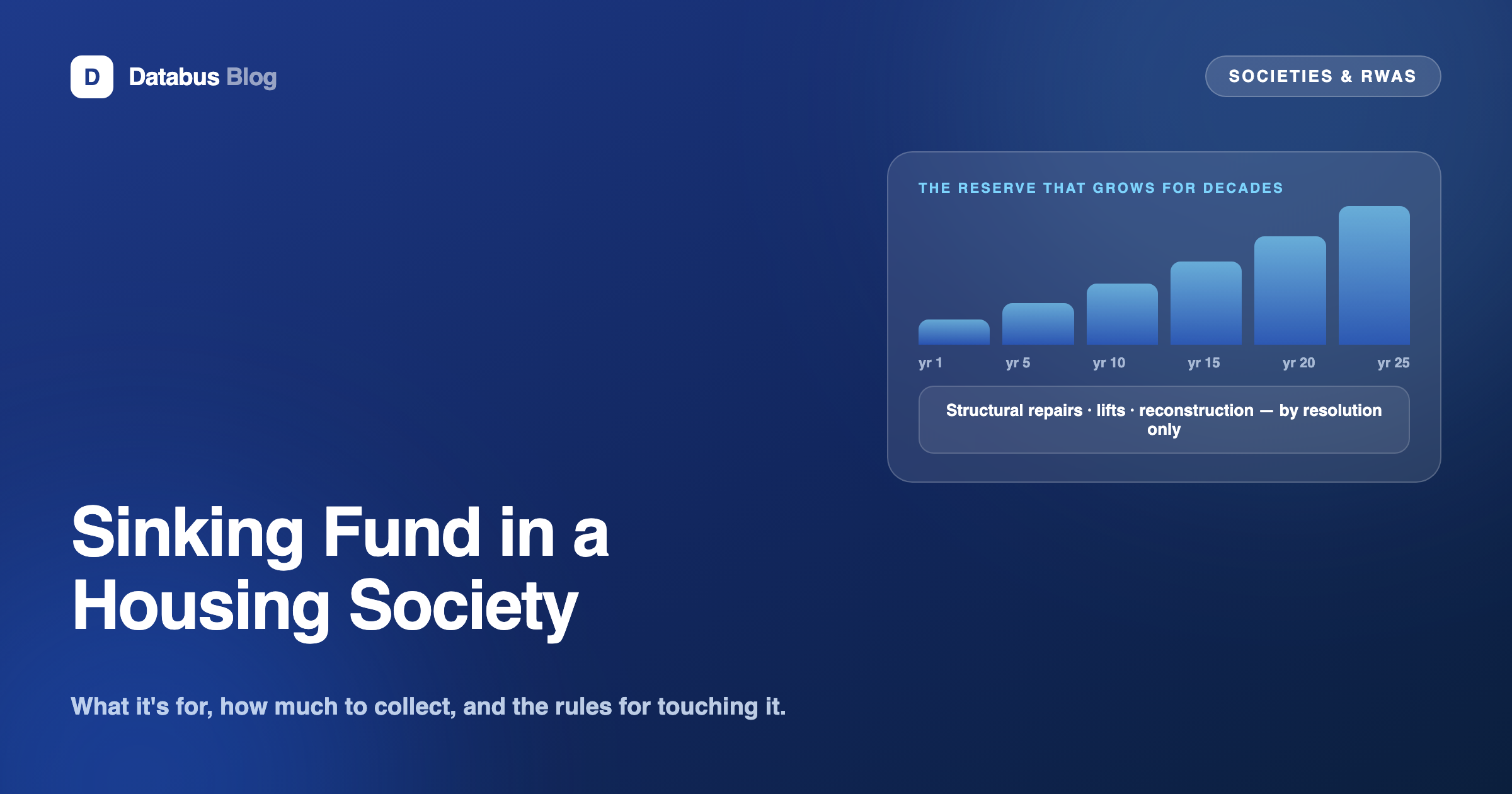
Every building has two kinds of expenses: the ones that arrive monthly (security, housekeeping, electricity) and the ones that arrive once a decade with six zeros (structural repairs, waterproofing the frame, lift replacement, eventually redevelopment). The sinking fund is how a society saves for the second kind — a dedicated reserve, collected monthly, that exists so a ₹40 lakh structural repair doesn't become a ₹1 lakh-per-flat emergency call.
What the sinking fund is for — and not for
- For: structural repairs and strengthening, major replacements tied to the building's fabric (lifts, structural waterproofing), and ultimately reconstruction/redevelopment when the building reaches end of life.
- Not for: routine maintenance, painting cycles, festival expenses or plugging deficits in the monthly budget. Societies typically maintain a separate repair fund for recurring upkeep; the sinking fund is the long-horizon reserve, and dipping into it for operating costs defeats its purpose (and in cooperative societies, generally violates the bye-laws).
How much is collected
Cooperative frameworks set minimums through model bye-laws — Maharashtra's model bye-laws, the most-cited template, prescribe a sinking-fund contribution of at least 0.25% per annum of the construction cost of each flat (collected monthly), and the general body can resolve to collect more. Other states' frameworks and apartment-owner associations set their own rates through bye-laws or general-body resolutions. Two implications worth noticing:
- The base is construction cost, not market value — the fund tracks what rebuilding costs, not what flats sell for.
- At minimum rates, the fund grows slowly by design — a society expecting major work sooner (older buildings especially) should resolve a higher rate early rather than special-levy later.
How it must be kept
- Separately. The sinking fund is shown as a distinct fund in the society's books and is typically parked in term deposits or other safe instruments in the society's name — not mixed into the operating account.
- Growing with interest. Interest earned on the corpus accrues to the fund itself.
- Spent only by resolution. Usage generally requires general-body approval — commonly a special resolution — and in cooperative regimes, prior permission or conditions from the registrar for major applications. The committee alone cannot spend it.
The audit question every member should ask
"What is our sinking-fund balance, where is it parked, and when was it last reconciled?" A society that can answer in one minute has its books in order. One that cannot has usually been quietly funding operating gaps from the reserve. Member-wise collection records make the first half easy — every flat's sinking-fund contribution tracked alongside maintenance in the ledger — and that is the accounting layer EstateDeck keeps for societies, with fund-wise books that separate operating money from reserves. Planning the corpus? Our free sinking fund calculator projects the fund from your rate, construction cost and horizon. New association still setting up its funds? Start with registration and first-90-days structure.
A note on accuracy: rates, resolutions and registrar permissions differ by state framework and your society's registered bye-laws — those documents are the authority for your building. Confirm specifics with your registrar or a society-law professional. This is general information, not legal advice.
Frequently Asked Questions
What is a sinking fund in a housing society?
A dedicated long-term reserve, collected monthly from members, for structural repairs, major replacements and eventual reconstruction of the building — distinct from the funds that pay routine monthly maintenance.
How much sinking fund should a society collect?
Cooperative model bye-laws set minimums — Maharashtra's prescribe at least 0.25% per annum of each flat's construction cost — and the general body can resolve higher. Older buildings expecting major work should deliberately collect above the minimum.
Can the sinking fund be used for painting or festival expenses?
No — routine upkeep belongs to maintenance and repair funds. The sinking fund is reserved for structural work and reconstruction, and spending it generally requires general-body resolution (and in cooperative regimes, registrar conditions).
Is the sinking fund refundable when I sell my flat?
Generally no — contributions attach to the flat and the building's future, not the member, and transfer with ownership. Check your society's registered bye-laws for the precise treatment.
Where should the sinking fund be kept?
As a separate fund in the society's books, parked in safe instruments like fixed deposits in the society's name, with interest accruing to the fund. Mixing it with the operating account is the classic red flag.