


Mock tests that match the real thing
A mock only works if it feels like the exam: right length, right mix, right pressure. PaperDeck builds full-length timed mocks from any span of syllabus, with the key ready before the test begins.
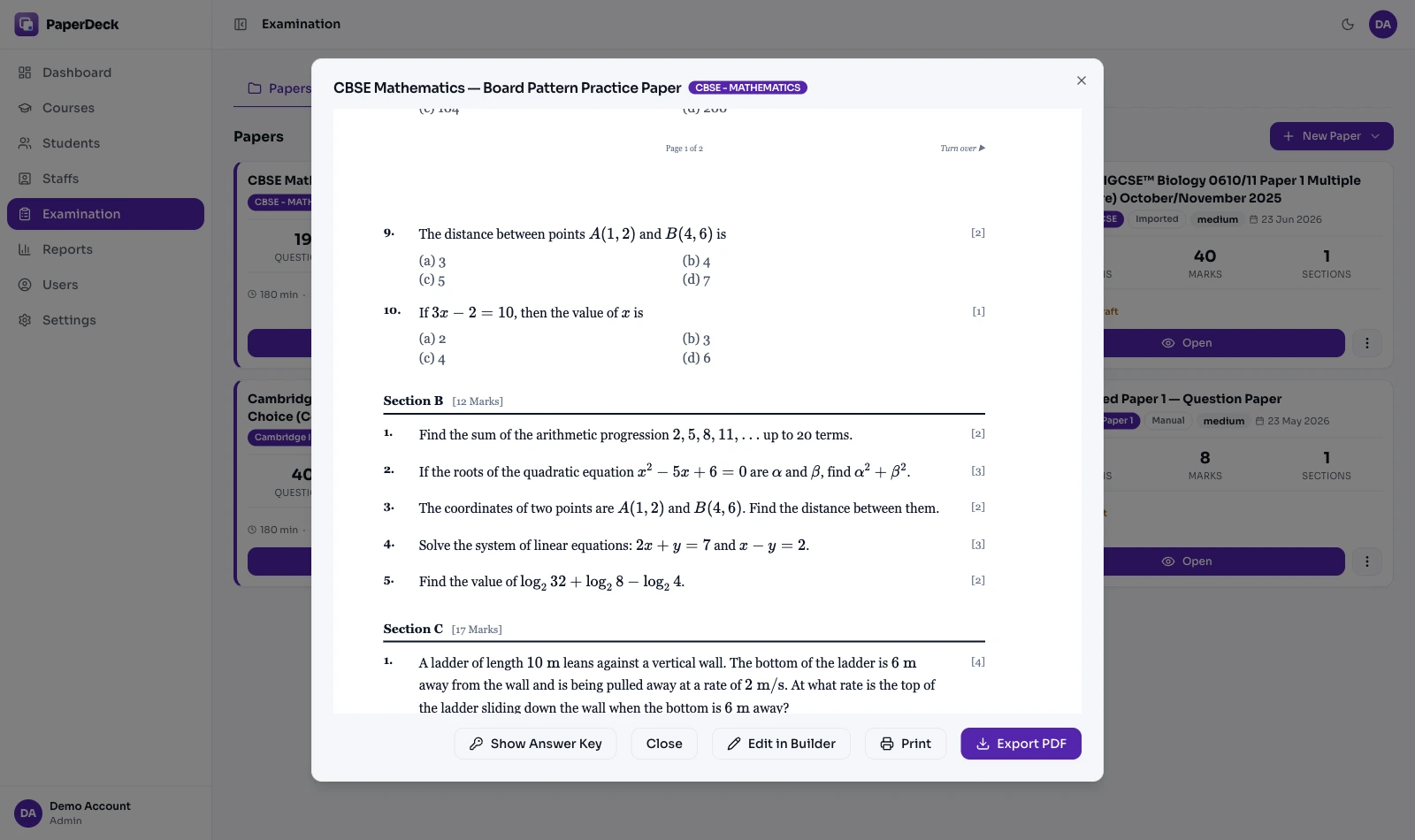
What does the mock test generator do?
It assembles full-length practice examinations rather than short quizzes: a complete paper across whatever syllabus span you choose, patterned on the exam's structure with sections, question types and marks distribution set by you or started from a board-style template. Duration and instructions print on the paper. The answer key and marking scheme generate with it, so evaluation starts the moment the test ends. Like every PaperDeck output, the draft is yours to review and edit before anyone sits it.
What separates a mock from a worksheet is calibration. A mock that is all easy questions flatters; one that is all hard questions frightens; neither predicts. The generator holds the difficulty mix you set across the whole paper, spreads chapters the way real papers spread them, and keeps question-type ratios faithful to the pattern you chose. Teachers running test series use the same calibration week after week, which makes score movement across mocks mean something.
The calibration discipline has a second payoff nobody advertises: it protects the teacher. When a parent challenges a low mock score, a comparable series turns the conversation from opinion into evidence; the paper shape did not change, so the score movement is real. Coaching centres that publish their series calibration openly find the transparency itself becomes a selling point, because parents can see rigour instead of taking it on faith.
Building a mock
-
1
Pick the span
Everything taught this term, the full year, or the exact chapters a coaching batch has covered. The mock's scope is a selection, not a fixed package.
-
2
Choose the pattern
Start from a board-style structure or define your own sections, marks and timing. The pattern persists, so mock 4 is comparable with mock 1.
-
3
Calibrate the mix
Set the easy-medium-hard split and the question-type ratios. The generator holds them across the paper instead of drifting hard at the end.
-
4
Review, print, evaluate
Read the draft, adjust what you must, and print with the key and scheme. Evaluation is checking against a scheme, not deciding marks case by case.
A worked example
A tutor runs a Sunday test series for a Class 12 physics batch. Week one covers five chapters: she builds a 70-mark, 3-hour mock on the board pattern with a 40-40-20 difficulty split. Every following Sunday she extends the span by the week's teaching and reruns the same pattern. By week eight her students have sat eight comparable papers, she can show each parent a score trend that means something, and she has spent her Saturday evenings on anything except cutting and pasting questions.
Where this fits, and where it doesn't
Built for you if
- ✓ You run test series and need week-over-week comparability
- ✓ Your students need exam-length stamina, not just topic checks
- ✓ You want the key and scheme ready before the test starts
- ✓ Your batch's syllabus span changes weekly
Not the fit if
- ✕ You need proctored online delivery at scale; PaperDeck prepares papers, it is not an exam hall
- ✕ You want adaptive question-by-question testing; that is PrepWise's territory for self-study
For a student practising alone, timed self-tests with analysis live in PrepWise, which plans the preparation around them. For school-wide examinations with halls and results, SchoolDeck runs the whole machinery. PaperDeck is the paper-maker.
If you run mocks rarely today, start with frequency before perfection: a decent mock every fortnight beats a perfect one per term, because stamina and attempt judgment are trained by repetition, not by paper quality alone. The generator removes the production excuse. The calendar discipline stays yours. Most teachers find that once producing a mock costs minutes, the series they always intended to run finally exists, and the students' exam-day composure shows it first.
Frequently asked questions
Can a mock follow the actual board pattern?
Yes, board-style templates carry the familiar section structure, marks distribution and timing, and you can adjust any of it. The point is that your students should not meet a surprise format on the real day.
How do I keep weekly mocks comparable?
Save the pattern and difficulty calibration once and rerun it on each week's span. Same shape, fresh questions; score changes then reflect the student, not the paper.
Does it generate OMR-style answer sheets?
Papers print with their key and scheme; MCQ sections list answers in a check-friendly grid. Full OMR scanning belongs to exam-hall systems rather than a paper generator.
Can I mix chapters from different terms?
Any span you can select, you can test: cumulative mocks, weak-chapter drills, or a full-syllabus final rehearsal.
What stops a leaked paper from repeating?
Regenerate on the same blueprint and every question is fresh. A compromised paper costs one click, not a weekend.
Can students sit these mocks online?
PaperDeck produces the papers; delivery is yours: print for hall-style sittings, or share the PDF for supervised home tests. Full online proctored delivery is exam-platform territory, by design outside this product.
How do I test only what a batch has covered?
The span selector is chapter-level, so a mock covers exactly the taught list and nothing beyond it. Two batches at different points get different spans on the same pattern in two runs.
Run a series, not a scramble.
Comparable mocks every week, keys included, Saturdays returned.
Book a demo