Comparison · Build In-House vs EstateDeck

Build property software in-house — or buy it?

The first version is the cheap part. The real cost is three years of maintenance, the one developer who knows the code, and re-coding every UPI, DLT and DPDP change — forever.

An honest build-vs-buy analysis for societies, landlords, developers and property managers weighing a custom app against a purpose-built platform like EstateDeck.

No maintenance burden No key-person risk Compliance kept current Live in 7 days
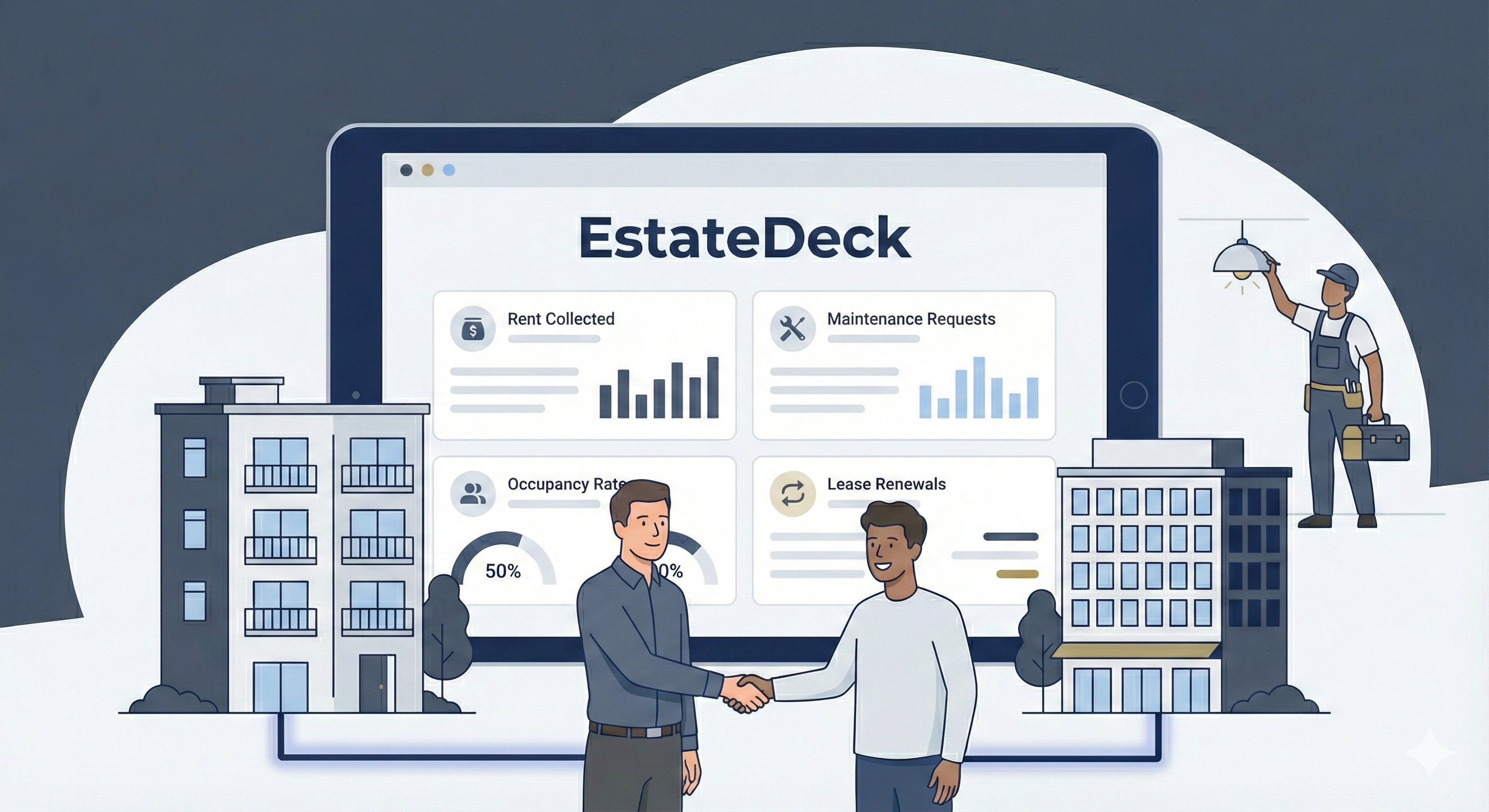
EstateDeck property platform replacing a custom in-house society app, showing UPI collection, gate logs and an audit-ready ledger that is maintained for you

The short answer

Build only if the software is your business

Building your own property or society app makes sense in exactly one situation: when the software itself is your product and competitive advantage. For a society, a landlord, a developer or a property manager, the software is a tool — not the business — and building it means signing up for permanent maintenance, a single engineer who becomes a single point of failure, and the duty to re-code every UPI, TRAI DLT and DPDP Act change yourself. Industry build-vs-buy analyses repeatedly find the majority of a system's lifetime cost lands after launch, not during the build. The honest rule of thumb: build only if property software is your product and you have a funded team to maintain it for years; otherwise buy EstateDeck and put your time back into the property.

In-house build
You own

The code, bugs & upkeep

EstateDeck
We own

Maintenance & compliance

Lifetime cost
Post-launch

Most of it comes after v1

Go-live
7 Days

vs months of building

The cost iceberg

What you budget for —
and what actually shows up

Teams price the build. The build is the tip. Below the waterline is where in-house property apps quietly drain time and money.

Visible

The first version. Discovery, design and the initial development of collection, a resident view and a ledger. The one line everyone budgets — and the smallest.

Hidden

Maintenance, year after year. Bug fixes, dependency updates, security patches and infrastructure. Industry estimates put annual maintenance at a meaningful slice of the original build cost — every single year.

Hidden

Compliance drift. Re-coding for every UPI mandate, TRAI DLT template change, and the DPDP Act 2023 timeline (rules notified Nov 2025; obligations targeted 13 May 2027). Miss one and you are silently non-compliant.

Hidden

Key-person risk. The one developer or freelancer who understands the code. When they leave, the app stops evolving — the most common way in-house property apps die.

Hidden

Opportunity cost. Every hour your team spends on software is an hour not spent on residents, tenants or the property itself — the thing that is actually your business.

Hidden

Support & training. Someone has to answer "the app isn't working" at month-end, onboard new committee members, and document a system only one person understands.

Cost ranges vary widely by scope and region; figures here reflect commonly cited build-vs-buy analyses, not an EstateDeck-specific estimate. Model your own three- to five-year total cost of ownership.

Build vs buy, line by line

A self-built app vs EstateDeck,
on what actually matters over time

Not which can theoretically do more — which one you can sustain for five years.

Comparison of a custom in-house property app and EstateDeck across cost, time, risk and maintenance
Dimension Custom in-house build EstateDeck (buy)
Time to first working version Months — discovery, build, test ~7 days — import unit list, go live
Upfront cost Large, front-loaded development spend No large upfront fee — per-unit in ₹
Ongoing maintenance Yours forever — patches, fixes, infra Included — handled by the vendor
Compliance updates (UPI / DLT / DPDP) Re-code each change yourself Kept current across all customers
Key-person risk High — one dev knows the code None — vendor team maintains it
Security responsibility Yours — pen-testing, patching, hosting Vendor — managed centrally
Resident app, gate, ANPR, helpdesk Build each one from scratch Already built and maintained
Improvements over time Only what you fund Continuous — shared across users
Data portability if it fails At risk — stranded in custom code Bulk export + Tally-ready files
Exact-fit customisation, day one Perfect fit — its real strength Configurable, not bespoke
Best when… Software is your product / unique moat Property is your business, software is a tool

"Custom in-house build" includes a freelancer-built app, an internal developer's project, or a builder-provided portal. Specifics vary — model your own situation and timeline.

The four ways it goes wrong

In-house property apps rarely fail loudly —
they fade quietly

The build usually ships. It is the second and third year where it comes apart.

1. The developer leaves

The freelancer takes a full-time job; the one internal engineer moves on. Suddenly no one can fix a payment bug or add a field, and the undocumented codebase becomes a liability the committee inherited without knowing it.

With EstateDeck, maintenance is never one person's job. See what's covered →

2. Compliance moves and the app doesn't

DPDP rules, TRAI DLT templates and UPI mandates keep changing. A custom app only stays compliant if someone funds the rework each time. Most don't — so the app drifts out of compliance without anyone noticing until an audit or a complaint.

EstateDeck absorbs regulatory change for every customer at once. Data handling →

3. The hard parts are the regulated parts

Teams assume they can build the "easy" basics and buy the rest. But UPI reconciliation, DPDP-grade data handling, DLT messaging and an audit-defensible ledger are the basics — and they are the hard, regulated, high-stakes core, not a weekend project.

EstateDeck ships the regulated core as standard. How UPI billing works →

4. The build never really ends

"One more feature" becomes a permanent backlog. The committee that approved a one-time build finds itself approving a never-ending stream of change requests, while the property's actual problems wait their turn behind the software's.

With EstateDeck, new features ship continuously, shared across every society. See the roadmap of modules →

A three-question test

Should you build or buy?
Answer these three honestly

If you cannot say yes to all three, the numbers and the risk point to buy.

  1. Is the software your business?

    Build only if the property software itself is your product and competitive edge. If property is the business and software is a tool, that points to buy.

  2. Can you fund five years of upkeep?

    Cost the next three to five years, not the first version — maintenance, security, infra, and re-coding every UPI, DLT and DPDP change. Most of the lifetime cost lands here.

  3. Who owns it when the builder leaves?

    Name the single person who understands the code. If they leave and the app dies, that is key-person risk — and the reason to buy a platform someone else maintains.

★★★★★

"A resident built us a society app for free. It worked beautifully — until he relocated. For our 156 flats we were suddenly stuck with an app no one could fix and a payment screen that broke after a UPI update. We moved to EstateDeck in a week. Now nobody on the committee is one resignation away from chaos."

Mr. Joydeep Ghosh

President, Co-op Housing Society — Salt Lake, Kolkata (156 flats)

Honest scope

When building is the right call — and where to read next

A comparison only earns trust if it tells you when the other choice wins.

Software is your product

If you are a proptech company selling a property product, the software is your competitive advantage — build it. EstateDeck is for operators whose business is the property, not the code.

A genuinely unique workflow

If one workflow is truly unique to you and is a real moat, build that one piece — and consider buying the common core beside it, since EstateDeck exports cleanly to other systems.

A funded, permanent engineering team

If you have engineers funded to maintain, secure and update the app for years — including every Indian regulatory change — the maintenance argument weakens and building becomes viable.

Not building — choosing between tools?

If you are weighing a spreadsheet or a bought system rather than a build, see vs Excel or vs a generic ERP.

Where each topic lives — read next

Frequently Asked Questions

Build vs buy — common questions

Should I build my own property management software or buy it?

Build only if property software is your core business and source of competitive advantage — for example, if you are a software company selling a property product. For a society, landlord, developer or property manager, the software is a tool, not the product, so buying a purpose-built platform almost always wins on cost, time and risk. The honest test is ownership: if you cannot name an engineer who will maintain the code for the next five years and re-implement every regulatory change, you should buy rather than build.

Why do in-house property apps cost more than they look?

The first version is the cheapest and most visible part of the cost. Industry build-vs-buy analyses consistently find that the large majority of a software's lifetime cost — commonly cited at roughly three-quarters — accrues after launch, in maintenance, security patches, infrastructure, support and continual rework. For a property app in India that also means re-coding every time UPI mandates, TRAI DLT templates or DPDP rules change. The sticker price of the build is not the cost of the software.

What is key-person risk in a self-built society app?

Key-person risk is the dependency on the single person who understands the codebase — the freelancer who built it, the one developer on staff, or the builder's IT contractor. When that person leaves, the app often becomes unmaintainable: no one can fix a bug, add a feature, or patch a vulnerability. This is the most common reason in-house property apps quietly stop being updated. A bought platform like EstateDeck removes the dependency entirely — maintenance is the vendor's job, not one person's.

How does compliance drift affect a custom property app?

Indian property compliance moves. The DPDP Act 2023 rules were notified in November 2025, with the bulk of obligations targeted for 13 May 2027. TRAI DLT messaging templates and header rules change. UPI and RBI payment requirements evolve. A self-built app must track and re-implement each of these forever, or fall out of compliance silently. A vendor like EstateDeck absorbs that ongoing regulatory work across all its customers, so the compliance posture stays current without your team rebuilding it.

How long does it take to build a property app versus buying EstateDeck?

A credible, production-grade property app — with UPI collection, per-flat reconciliation, a resident app, a gate register and an audit-ready ledger — is a multi-month build, followed by a never-ending maintenance commitment. EstateDeck imports your existing unit list and most landlords and societies are live within seven days of a demo. You are comparing months of build plus permanent upkeep against a one-week go-live with maintenance handled for you.

Isn't a custom build better because it fits our exact needs?

Custom does fit exactly on day one — that is its genuine strength. But property workflows are far less unique than they feel: UPI dues, defaulter chasing, visitor gates, maintenance tickets and society audits are common across almost every Indian society and rental. A purpose-built platform has already solved these for thousands of properties and keeps improving them. Build only for the rare workflow that is truly unique to you and is a competitive advantage; buy the common 90 percent.

Can we build the basics in-house and buy the rest later?

Many teams try this and find the basics are the expensive part. UPI reconciliation, secure resident data handling under the DPDP Act, DLT-registered messaging and an audit-grade ledger are not the easy 80 percent — they are the hard, regulated core. Buying the core and reserving any in-house effort for a genuinely unique add-on is usually the cheaper, lower-risk version of the hybrid idea. EstateDeck's Tally-ready export means it also slots beside systems you already run.

Our builder gave us a free portal — isn't that an in-house solution?

A builder-provided portal is a common starting point, but it is usually maintained only while the builder is still involved with the project. Once the defect-liability period ends and the builder moves on, the portal often stops receiving updates, security patches and compliance changes — the same key-person and compliance-drift risks as any in-house build, with the added problem that the society does not own or control the code. EstateDeck is owned and operated independently of any single builder, so it outlives the handover.

What happens to our data if we stop building or the project fails?

A failed or abandoned in-house build often leaves resident and financial data stranded in a database only the original developer understood, with no clean export path. That is both an operational and a data-protection problem. A bought platform is designed for portability — EstateDeck keeps a structured per-unit ledger and supports bulk export and Tally-ready files, so your data is never trapped in code that no one maintains.

When does building in-house actually make sense?

Building makes sense when property software is the product you sell, when a workflow is genuinely unique to your business and is a competitive moat, and when you have a permanent in-house engineering team funded to maintain, secure and update it for years — including every Indian regulatory change. If all three are true, build. If any one is missing, the total cost of ownership and the risk almost always favour buying a purpose-built platform.

How is EstateDeck priced compared with funding a build?

EstateDeck uses per-unit pricing in rupees with no large upfront fee and no per-module charge for the core suite, so the cost scales with the units you manage. A build front-loads a large development cost and then commits you to open-ended annual maintenance — commonly estimated at a meaningful percentage of the original build cost every year. Compare total cost of ownership over three to five years, not the first invoice, and the predictable per-unit model usually comes out ahead for a property operator.

EstateDeck by Databus · Chennai

Why build for a year
what you can run in a week?

A 30-minute demo on your actual unit list — see the app you were about to build, already maintained for you. No card, no slides, no sales pitch.