Cricket, football, badminton, swimming — the academy's real game is off the field: seasonal camps and annual batches, per-session coaches, assessment cycles, kit money and parents on the boundary line wanting updates. TutorDesk runs that side so coaching hours stay coaching hours.
A sports academy lives on a double calendar: year-round development batches with monthly fees, and high-intensity holiday camps that fill in weeks and end in a fortnight. Both need seat truth, both feed each other, and the academies that grow treat the camp as their demo class: a two-week camper whose parent gets attendance, photos-day notices and a closing assessment becomes an annual student at rates cold enquiries never match. Running that conversion deliberately, camp roster to enquiry list to annual batch, is the single highest-leverage system an academy can install.
Academies increasingly sit inside pathways: school teams, district trials, franchise scouting. What those pathways ask for is history, sessions attended, assessment cycles, coach notes, and the academy that can print a athlete's two-year record in minutes looks institutional in rooms where that matters. Selection days themselves are operations: nomination lists drawn from batch records, parent consents collected against names, results recorded where the next cycle can see them. None of this needs new effort if training life is already recorded; it is the same attendance and assessment data wearing formal clothes.
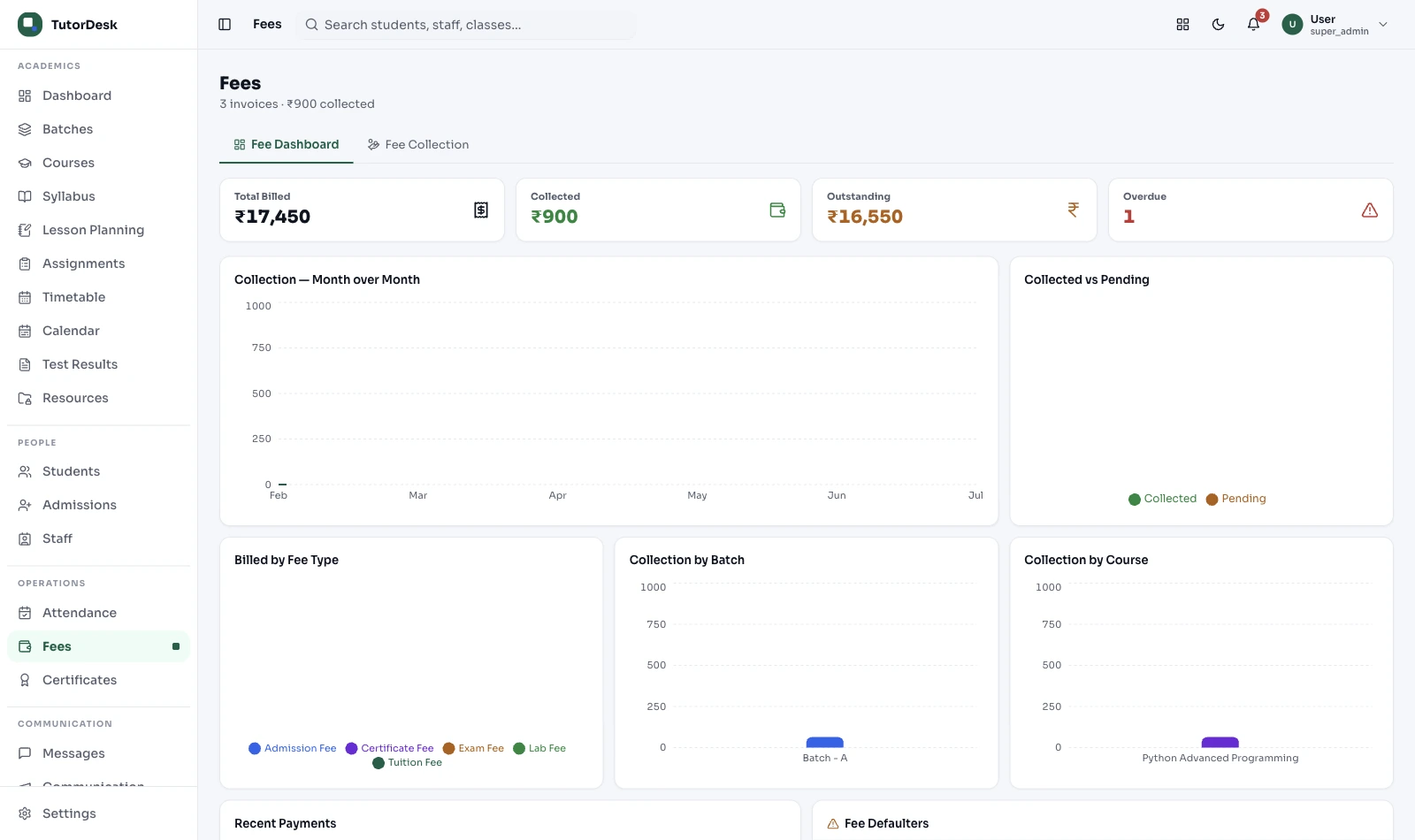
Sports fees fragment: monthly coaching, annual registration, kit and equipment, tournament travel, and the occasional personal-coaching block. Fragmented fees plus cash at the ground is how academies leak revenue without noticing. One family ledger with line items, UPI at the ground with instant receipts, and an ageing view the manager reads weekly closes the gap, and the receipts double as the clean records selection trials and school partnerships increasingly ask academies to show.
Under-12 morning, under-16 evening, elite squad — each with its coaches, venue, capacity and fee.
Holiday camps with their own price, dates and seats; campers convert to annual batches with history intact.
Quarterly fitness and skill assessments recorded per athlete and shared with parents as plain progress.
Session loads counted from the same timetable parents see; mixed salaried and per-session terms supported.
No — a batch is a batch whether it meets in a room or on a court. Sessions, coaches, attendance and fees work the same; venues are just part of the batch's schedule.
Camps run as short courses with their own fee, capacity and dates alongside year-round batches. The same enquiry pipeline fills them, and camp attendees convert to annual students with their history intact.
Use assessments the way coaching uses tests: recorded per student per cycle, shared with parents as progress. Timings, skill grades or selection outcomes — the fields are yours; the discipline of recording and sharing is the system's. Quarterly cycles work for most academies: long enough to show real movement, frequent enough that a plateau gets noticed while the season can still respond to it. The record also protects coaches — progress questions from parents get answered with data instead of recollection.
Per-session coach terms with loads counted from the timetable, alongside salaried head coaches — the same mixed model coaching institutes use, and the same written-terms discipline our teacher-pay guide argues for.
Yes. Ground A mornings, indoor courts evenings, pool on weekends — each batch carries its venue in the schedule, coaches see their day across venues, and clashes show up when the timetable is built rather than when two squads arrive at one net.
Keep emergency contacts and relevant medical flags on the student record, visible to the coaches who need them and nobody else. For anything clinical, the academy's paper process stays primary; the system's job is making the flag impossible to miss.
A 20-minute demo set up for a sports academy — camps, batches and boundary-line parents included.


