Branch two fails at branch one more often than at its own address: the owner leaves, the systems turn out to live in the owner's head, and two half-run centres replace one good one. The fix is making the institute runnable before making it bigger.
A second branch is a photocopy; the original has to be sharp. That means the fee sequence, the test calendar, the enquiry follow-up and the parent updates run as systems with named owners, not as the founder's daily heroics. The honest test: take two weeks off and watch the numbers. Where they wobble is exactly what branch two will inherit, doubled.
Teachers are the hardest thing to photocopy. The workable patterns are a shared senior who anchors the flagship subject at both branches on fixed days, local hires grown behind that anchor, and test-paper and materials standardisation so quality travels even when people cannot. What breaks branches is the quiet drift where each site's teachers reinvent the course; the shared test calendar is the antidote, because common tests expose divergence in marks before parents expose it in admissions.
The moment operations split across two spreadsheets, the branches stop being one institute financially. A single system with branch-tagged batches, fees and enquiries keeps consolidated truth: collections by branch, dues by branch, seats by branch, on one screen the owner reads over morning tea. The branch manager sees their branch; the owner sees the institution. That split of visibility is the actual management structure, everything else is designation.
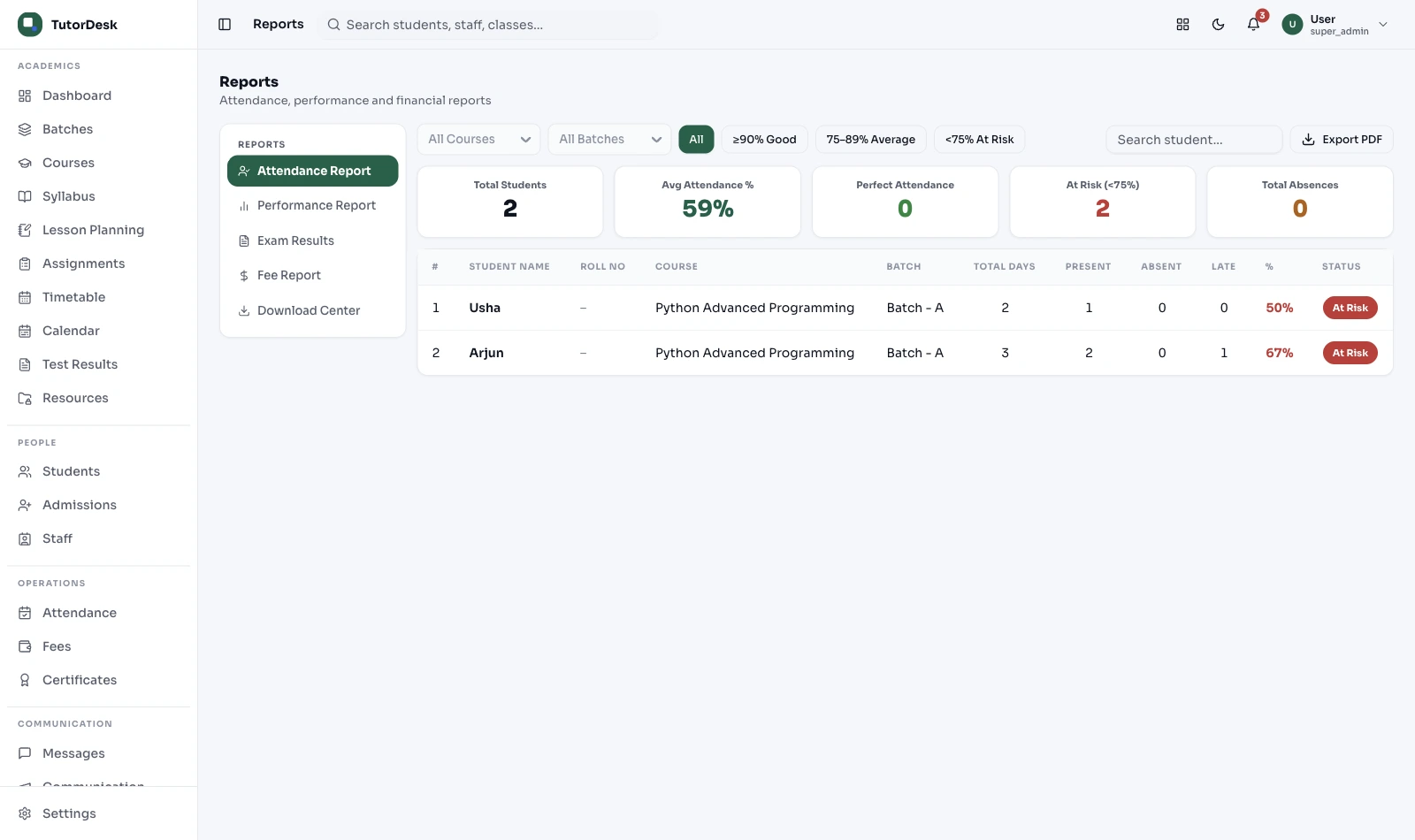
Every daily operation gets an owner and a system home. The founder's job becomes reading reports, not creating them.
Catchment, timings demand, competition density and the room maths from our startup guide, run coldly a second time.
Branch two opens with the same test calendar, fee rules and follow-up sequence from day one. Culture copies through routines.
An operations lead who owns dues, enquiries and parent communication; faculty can be shared, grown or hired behind that spine.
Same four numbers per branch, side by side. Divergence is the earliest signal, and with one system it is visible the week it starts.
When branch one runs a full month without the owner touching daily operations, and the surplus after the owner's own fair salary can fund the new branch's first two terms. Readiness is operational and financial, in that order.
Same course, same brand promise; the fee can vary with locality economics if the difference is printed and explained. What cannot vary is the refund rule, the test calendar and the reporting, because those are the brand.
Your best operations person, not your best teacher. Teaching quality travels through the test calendar and faculty training; a branch dies faster from unchased dues and unfollowed enquiries than from a average lecture.
Far enough that they recruit from different catchments instead of cannibalising one another, close enough that shared faculty and your own weekly presence remain practical. In most cities that is a different neighbourhood cluster, not a different pin code across town; the batch-timing map of branch one usually shows where its catchment actually ends.
Franchising trades control for speed and someone else's capital, and it only works once the operating system you would hand a franchisee actually exists: documented fee rules, test calendars, follow-up sequences and reporting. If branch one still runs on your presence, you have nothing transferable to sell; systemise first, then choose between owning and franchising with a real option in hand.
Same metrics, same definitions, same system: collections against demand, seats against capacity, enquiry conversion, test participation. Branches on different spreadsheets are not comparable, they are just differently opaque.
See branch-wise batches, fees and reports in one login — before you sign the second lease.


