An empty seat costs exactly what a full one does: same teacher, same room, same hour. Filling it is the highest-margin revenue an institute can earn, and it starts with knowing, precisely, where the empties are.
An institute at 75 percent overall fill usually contains batches at 95 and batches at 40, and the average hides both. The 40s are where rent burns: a physics evening batch scheduled against a school exam week, a weekend batch that never recovered from a timing change. Seat truth per batch, visible daily, is the whole foundation; every decision below is only as good as this number.
Generic promotion fills nothing in particular; specific promotion fills specific rooms. Once the diagnosis says a batch deserves to exist, market that batch: the timing, the teacher, the seats left, to the audience that timing serves. A morning dropper batch advertises where droppers actually look; a weekend batch sells at Friday pickup time to the parents already standing in your corridor. Scarcity stated honestly, four seats left in the 6 am JEE batch, converts better than any general banner, and it can only be stated when seat counts are live rather than remembered.
Before marketing anything, look at when the empties happen. A dead 4 pm slot may be a school-timings problem, not a demand problem, and the fix is moving the batch, not advertising it. Morning capacity sells to droppers and repeaters; late evenings to school students; weekends to the far catchment. Matching batch timing to audience is free, and it routinely outperforms paid campaigns aimed at the wrong hour.
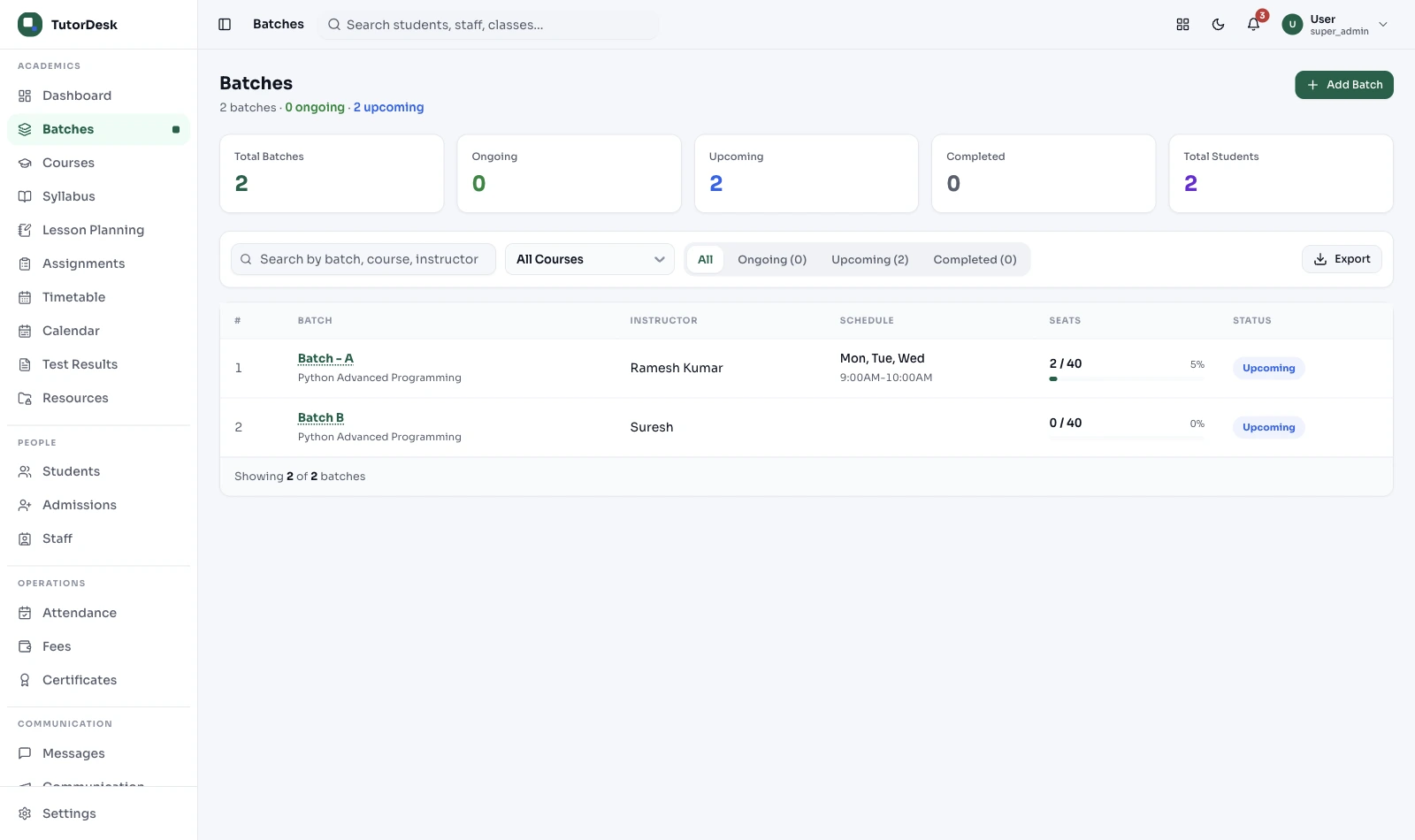
The daily list, worst first. Every seat on it has a rent bill and a teacher already attached.
Timing clash, weak subject reputation, or plain invisibility: each has a different fix, and only one of them is marketing.
The enquiry desk should see open-seat counts while talking. Steering a fresh admission to a hungry batch costs nothing and balances the room.
Outside students sitting your mocks fill rooms off-peak and become next term's warmest admission pipeline.
A batch that stays under water after all of this is a schedule decision. Closing it well, with students placed carefully, protects the brand better than running it thin.
Full enough that the economics work, loose enough that teaching quality holds; most institutes plan around 80 to 90 percent of stated capacity. What matters more than the target is knowing today's number per batch without walking the corridor.
When syllabus positions are close, merging recovers teacher hours and room rent at the cost of one awkward week of adjustment. When they are far apart, merging quietly taxes every student in the room. Compare syllabus position first, seat counts second.
Discounts fill seats with discount-seekers, and the batch remembers the price forever. Fill with product instead: a visible test series, a real demo, a mid-course entry plan for late joiners. Price cuts are the last tool, not the first.
A real waitlist, names, numbers and the batch they want, is inventory for the next intake and evidence for adding a section. It works only if it is honest: waitlisted families deserve a date when you will confirm either way, because a silent waitlist quietly sends them to the competitor who answered.
From this term's numbers: retention rate per batch, sibling pipeline, enquiry conversion and the seasonal pattern of your own admissions calendar. Institutes that plan batches from last year's actuals rather than ambition open fewer half-empty rooms, and the forecast improves every term the data stays in one system.
As late as your catch-up machinery allows: recorded sessions, condensed notes and one bridging session make a week-four entry routine. Without that machinery, late admissions are a refund risk wearing an admission's clothes.
Batch-wise seats, timings and enquiry steering, live in one view — see it on your own batch structure.


