Pending fees are rarely about bad intent. They are about due dates nobody tracked, reminders that arrived as accusations, and an office chasing memory instead of a list. The fix is a sequence, not a confrontation.
Fee leakage in a coaching institute is quiet. A missed instalment in June becomes two by August, the parent starts avoiding the office at pickup time, and by Diwali the conversation that would have been routine in June has become the one everyone postpones. Multiply by fifteen families and the institute is financing its own students unknowingly, usually while its own rent cheque is not optional. The institutes that collect well are not tougher; they are earlier. Every step of their sequence happens while the amount is still small and the relationship still comfortable.
Institutes underestimate how much collection behaviour improves when paying becomes effortless and provable. A UPI link in the reminder, a receipt that lands on the parent's phone within seconds, and a balance that updates before the parent has pocketed theirs, together these end the era of 'I paid cash to someone last month' conversations. Cash still arrives in every institute; the discipline is banking it promptly and receipting it identically, so the ledger stays the single version of truth. When paying is easier than postponing and every payment leaves a trace both sides trust, most of the chase disappears before it starts.
Excel knows who owes; it does not know who was reminded, who promised what on which call, and which promise expired yesterday. Collection is a workflow, and spreadsheets store states, not workflows. The moment recovery depends on one person remembering to check a sheet and act, leave, exams and busy weeks become collection incidents. The ledger and the follow-up need to live in the same system, where an overdue instalment carries its own history and its own next action.
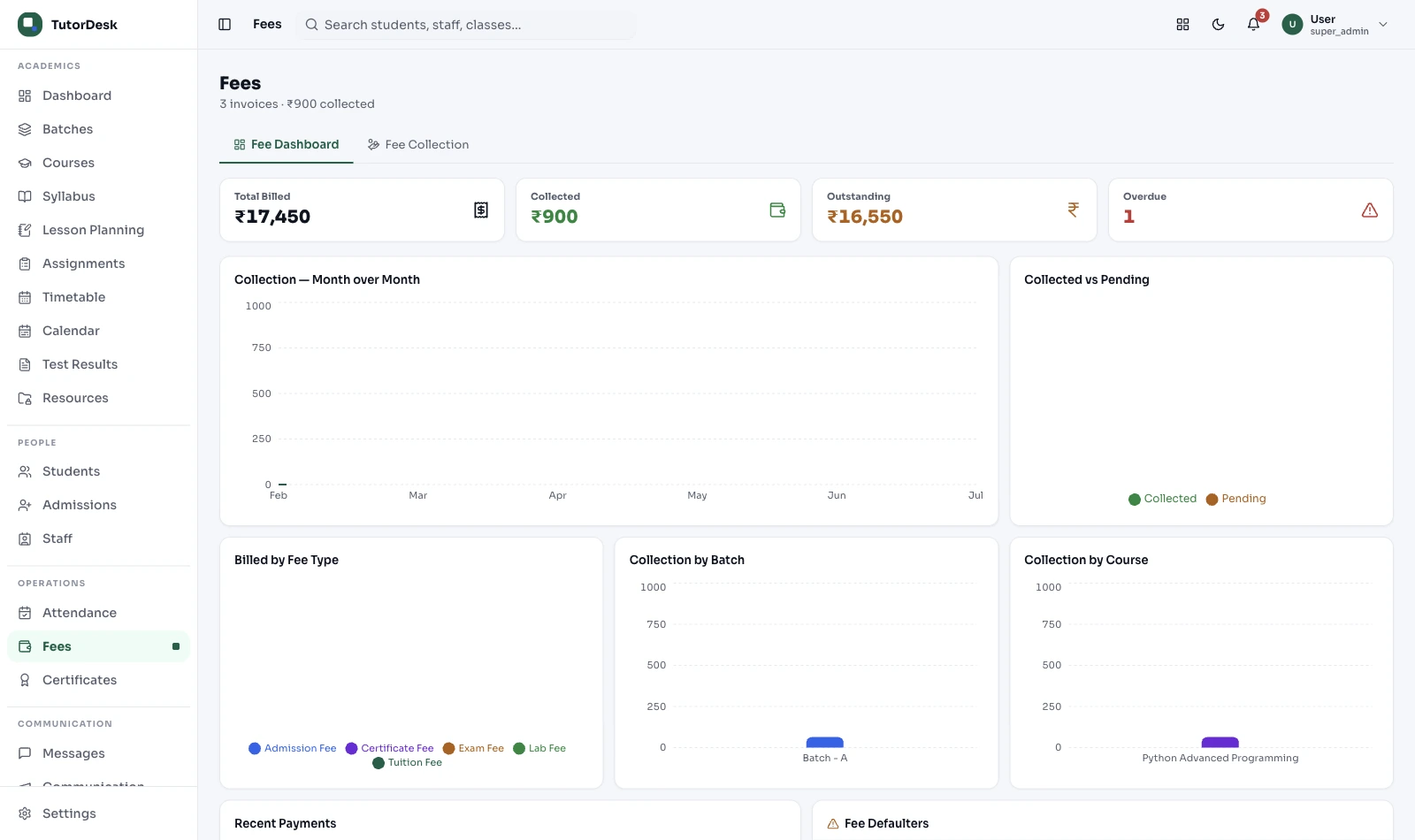
Due dates, grace days and the late-fee line sit on the admission form. Recovery begins at admission, months before the first delay.
A polite heads-up three days before the due date collects a surprising share on time. It reads as service, not as chasing.
Day one and day seven after the due date, with the amount and a payment link. UPI plus an instant receipt removes every excuse that begins with 'I will come by the office'.
The third contact is human, specific and short: this instalment, this amount, these options. The tone stays easy because the history is on screen, not in dispute.
A documented instalment plan for genuine difficulty; a pause on services for silence. Both are decisions, and either beats a fourth reminder.
Two automated nudges, then a human. The first reminder lands before the due date as information, the second just after as a nudge; by the third contact the office should be calling with the specific instalment and amount on screen, not sending a third template.
A printed, modest late fee applied uniformly helps because it makes delay a priced choice rather than a negotiation. Punitive amounts backfire; parents dig in, and the argument costs more than the fee. The rule's consistency does the work, not its size.
Have one quiet, official path: a documented instalment restructure approved by a named person. It protects the family's dignity, keeps the concession off the rumour network, and keeps the ledger honest, because a restructured schedule is a plan while an ignored due date is a leak.
As a stated last step, yes, and almost never as a surprise. The sequence earns the right to pause: rule printed, reminders sent, call made, restructure offered. A pause that arrives after all four reads as fair process; one that arrives instead of them reads as humiliation, and the family tells the story their way.
When the same batch keeps producing them. Dues cluster where students are quietly disengaging, and the fee report is often your earliest attendance report. Chase the money, but read the pattern too.
See the fee ledger, reminders and ageing view on your own numbers in a 20-minute demo.


