A consultancy is two businesses sharing a lobby: coaching batches preparing for IELTS or PTE, and counselling cases marching through shortlists, applications and visas on unforgiving dates. TutorDesk runs both on one student record — prep on the batch side, cases on the pipeline side.
The coaching half behaves like any institute: batches, schedules, fees, mock scores. The counselling half behaves like a deadline factory: each student is a case at a stage, shortlisting, applications, offers, visa, with documents to chase and dates that do not negotiate. Consultancies stumble when the second half runs on counsellors' personal inboxes, because a resignation or a holiday becomes a missed intake. Cases with stages, owners and dated next actions, visible to the manager on one screen, are the difference between a practice and a heap of correspondence.
Counsellor attrition is the quiet catastrophe of this industry: a resignation mid-season and forty families' histories leave in an inbox. Cases that live on the system, every conversation summarised on the record, every document's status visible, every deadline dated, make handover an afternoon instead of a crisis. The same structure powers accountability while everyone is still here: a branch head can see cases untouched for ten days, stages that cluster before visa season, and which counsellor's cases actually reach offers. Consultancies sell trust in outcomes; internally, that trust is built from records nobody can walk away with.
Consultancy revenue arrives in stages, registration, per-application charges, success fees, visa-stage payments, often alongside test-prep tuition from the same family. A staged fee plan per engagement, receipts at every payment and an ageing view across both sides of the business keeps the picture honest, and keeps the awkward end-of-journey collection, the success fee after the offer letter, anchored to a signed schedule instead of a negotiation. For the prep side, our IELTS and spoken-English page covers the batch mechanics in depth.
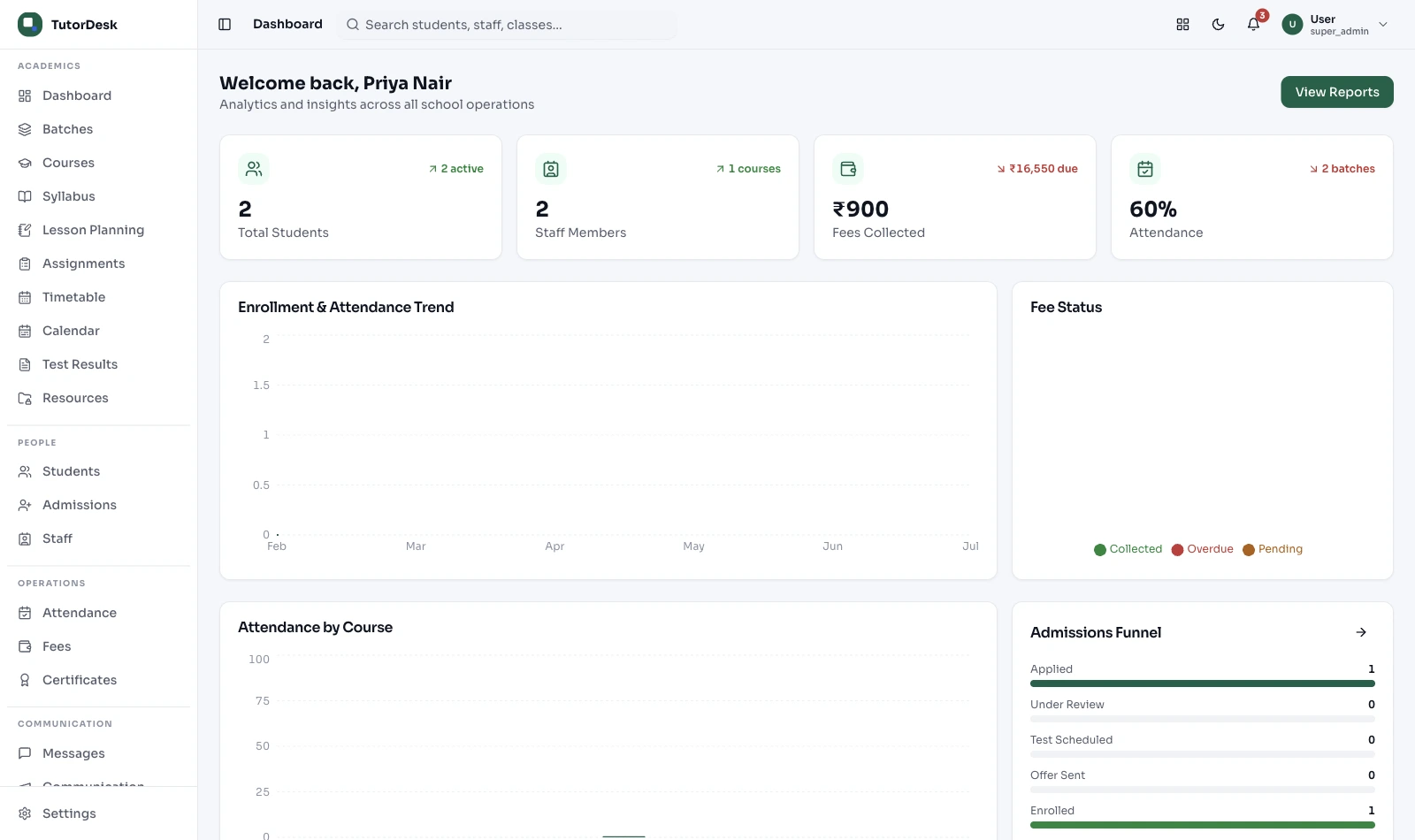
Every student a case at a stage with a named counsellor and a dated next action — visible beyond one inbox.
University intakes and document deadlines as scheduled follow-ups; the Monday view shows the week's dues.
Registration to visa-stage instalments on a signed schedule, receipts at each step, ageing watched weekly.
IELTS and PTE batches with schedules, mocks and fees — the same student record feeding the counselling side.
One. Test-prep batches run exactly like coaching batches — schedules, fees, mock scores — while counselling cases run as enquiry pipelines with stages and owners. The two sides share the student record, which is the whole point: the IELTS student is next season's application case.
As dated follow-ups with owners, the same discipline our enquiry pipeline enforces for admissions: every case has a next action and a date, and the Monday view shows what falls due this week — intakes, documents, university deadlines.
Yes — registration, shortlisting, application and visa-stage instalments run as a scheduled fee plan per student, with receipts at each stage. Refund rules printed on the engagement letter behave exactly like the fee-structure guide recommends.
No. TutorDesk runs your operations — cases, deadlines, documents checklists, fees, communication. Applications live in the universities' own portals; what the system guarantees is that no case misses a date because it lived in someone's inbox.
Branches run under one account with cases and fees reported per branch and consolidated. Independent sub-agents are outside the system's trust boundary; most consultancies register the referred student as a case with a source tag, which keeps payout arithmetic and DPDP-shaped data responsibility clean.
Both sit on the record: the student gets the checklist and session updates, the parent gets the stage changes and fee receipts. Nothing depends on one counsellor's chat history — which is also what makes counsellor handovers survivable.
A 20-minute demo set up for a study-abroad consultancy — pipeline, batches and staged fees together.


