CUET coaching is a short, intense season with a scheduling problem at its heart: every student sits a different combination of domain subjects. TutorDesk runs the operations underneath — combination-aware batching, crash-course seat economics, mock series on the CUET pattern, and fee collection compressed into a five-month window.
A CUET student is not “a student” — they are English plus General Test plus two or three domain subjects, and the next student overlaps on only half of that. The timetable is therefore the hardest problem in CUET coaching: domain-subject slots that don’t collide, a General Test track everyone shares, and students assembled into batches per subject rather than per course. TutorDesk’s batch and timetable scheduling is built for exactly this shape: one student, several batches, no clashes, and a personal timetable that makes sense to a seventeen-year-old.
The CUET revenue year is compressed — enquiries surge after boards wind down, crash batches run hot for a few months, and then the season ends. Compressed seasons punish slack: an empty seat in a twelve-week crash batch can never be resold, and a batch that starts a week late has lost a tenth of its product. Live seat counts per batch, waitlists that fill cancellations, and daily fee-collection visibility are the difference between a season that funds the year and one that merely happened. Run your numbers on the batch occupancy calculator before you set batch sizes.
CUET rewards familiarity with its own rhythm — MCQ sections against the clock, subject-wise slots, normalisation anxiety. The institutes that deliver run their mock series like a railway: scheduled tests per subject combination, marks entered and ranked while motivation is high, and section-wise trends visible to student and parent. TutorDesk’s test management holds the series together; result history does the retention work when a student wavers mid-season.
The CUET enquiry wave is sudden and short. Families arrive comparing universities, second-guessing subject choices, and shopping three institutes in a weekend. A logged pipeline — source, counsellor, follow-up date, outcome — through enquiry management means the surge converts instead of evaporating, and next year’s season starts with data about which schools and channels actually produced students. Follow-ups in the CUET window are measured in hours, not days: the family that visited on Saturday has usually decided by Wednesday. A pipeline with scheduled call-backs, sent fee plans and recorded outcomes converts the weekend browsers; a diary and a stack of visiting cards does not. The season is too short to learn this twice.
When CUET scores land, the institute briefly becomes a counselling desk — university cut-offs, normalised-score confusion, second-round strategy. Institutes that schedule this as a formal result-week service, with slots booked and outcomes recorded, convert it twice over: families refer the next season’s students, and the sibling in Class 11 becomes this year’s board-tuition admission. The records make it cheap — every student’s mock history and subject profile is already on screen when the family sits down, so the counselling is specific instead of generic, and the goodwill is earned in fifteen minutes rather than promised in a brochure.
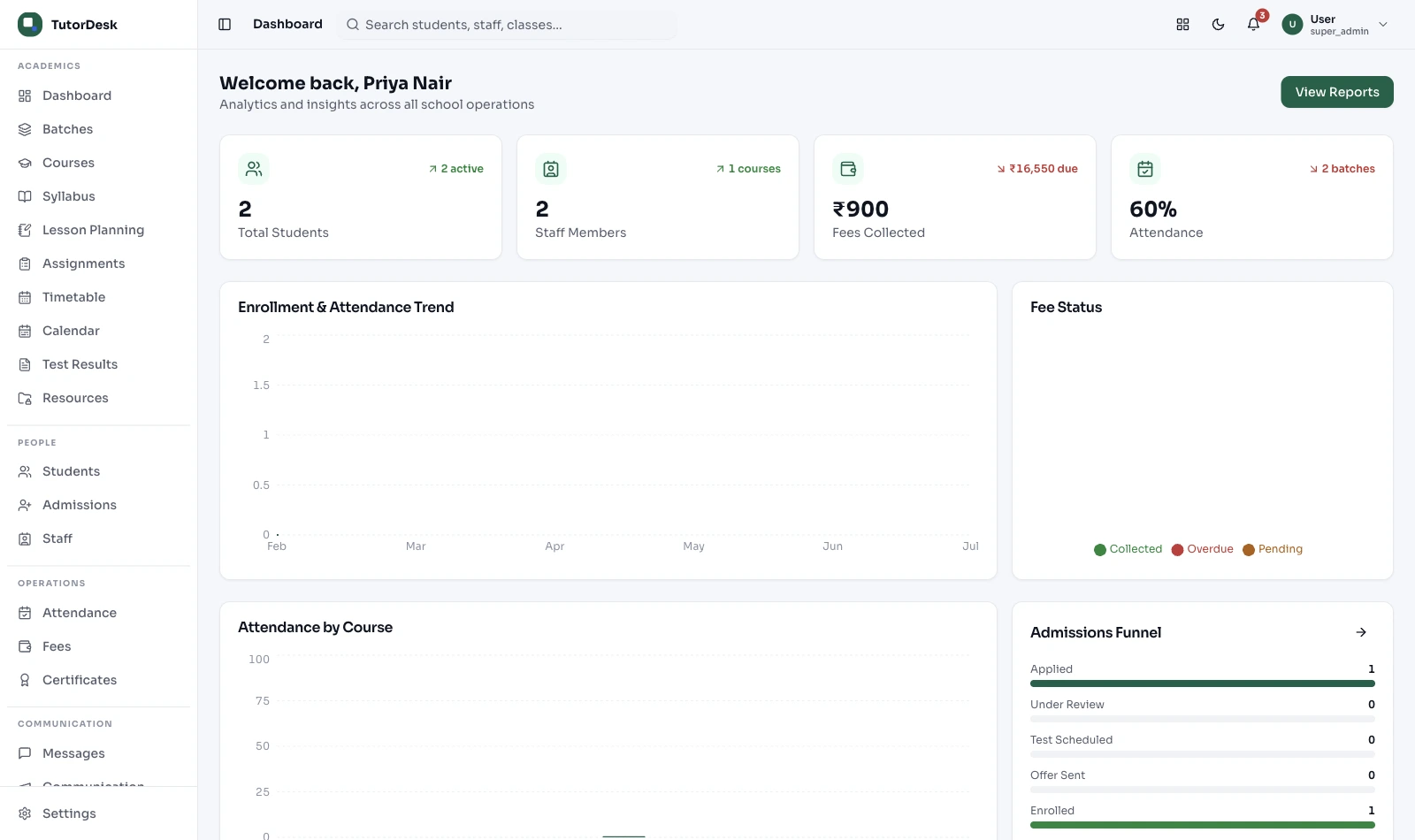
A student enrols once and joins multiple batches — one per subject plus the General Test track. Their timetable, attendance and results consolidate on the single student record, while each batch keeps its own schedule and seat count.
Compressed seasons are where operations pay off most — unsold seats and slow fee follow-ups cannot be recovered later. Per-active-student pricing also means a seasonal roster costs less in the off months.
Yes — CUET crash batches sit beside year-round tuition batches in the same system, with their own fees and calendars. Many tuition centres add CUET as a season; see the tuition centre setup.
Ranks are computed per test, so subject-wise mocks rank the students who sat them, and General Test mocks rank everyone. Section-wise history per student stays comparable across the season.
Both patterns are common and both are supported: a single fee with a registration advance, or two to three instalments across the season, with automatic reminders and instant receipts either way.
Yes — attendance, mock results and receipts flow to parents throughout. In a five-month course there is no slack for a surprise conversation in month four.
A 20-minute demo set up for a CUET operation — combination batching, mock series and crash-course fees included.


