A language institute sells a ladder — A1 to B2, N5 to N2 — in small groups, session packs and exam cycles set by Goethe, JLPT and DELF calendars. TutorDesk runs the operations underneath: level-wise batches, pack billing, attendance that respects make-up classes, and the records a study-abroad pipeline depends on.
Nobody buys “German”; they buy A1, and if A1 goes well they buy A2. The ladder is both syllabus and retention engine — exactly as it is in music schools and coding academies — and it deserves to be run as structure: each level a course with its own fee, duration and batch, completions recorded, and the next level offered at the moment the current one closes. A student’s history should read like a passport: A1 completed in March, A2 in July, B1 registered — evidence that sells the next enrolment without a pitch.
Language teaching lives in small groups and paid session packs — twenty sessions of spoken practice, a ten-class conversation pack — where every absence triggers the make-up-class negotiation. Packs need honest accounting: sessions attended, sessions remaining, make-ups granted and consumed, all visible to the student and the front desk from the same record. Small groups also make the seat arithmetic sharp; a six-person batch missing two students is running at two-thirds economics, which is why per-batch occupancy belongs on the owner’s screen, not in a notebook.
Goethe, JLPT, DELF and TOPIK dates are fixed points the whole institute schedules around: enrolment pushes before each cycle, mock speaking and listening sessions in the final weeks, and batch completions timed to land students at the exam ready. Treat each cycle as a season — batches aimed at a date, mock sessions scheduled and recorded through test management, and results captured so the institute’s pass record is a number it actually knows.
Half the demand for German and French classes arrives holding a university shortlist. If you also run consultancy, the language records and the counselling pipeline belong in one place — see our study-abroad consultancy setup; if you partner with consultants, clean level-completion records are what make your certificates worth referring. Either way, the institute that can show a student’s attendance, levels and mock scores on demand is the one the visa file quotes. For English-track operations, the spoken English & IELTS setup covers the same machinery. Corporate batches deserve a mention too: companies buying German for an engineering team or Japanese for a delivery centre want invoices, attendance reports and completion summaries addressed to the company — which is the same record machinery pointed at a different payer, not a second system.
A qualified German B2 teacher or a JLPT N2 instructor is the scarcest resource in the building, often part-time, sometimes teaching across two institutes. Their hours need the same discipline as the students’: load visible per teacher, batches assigned without collisions, substitutions recorded, and payouts computed from sessions actually taught. TutorDesk’s teacher and HR management keeps the scarce hours honest — which is also what keeps the scarce teachers, because nothing burns out a part-time instructor faster than disputed session counts at payout time.
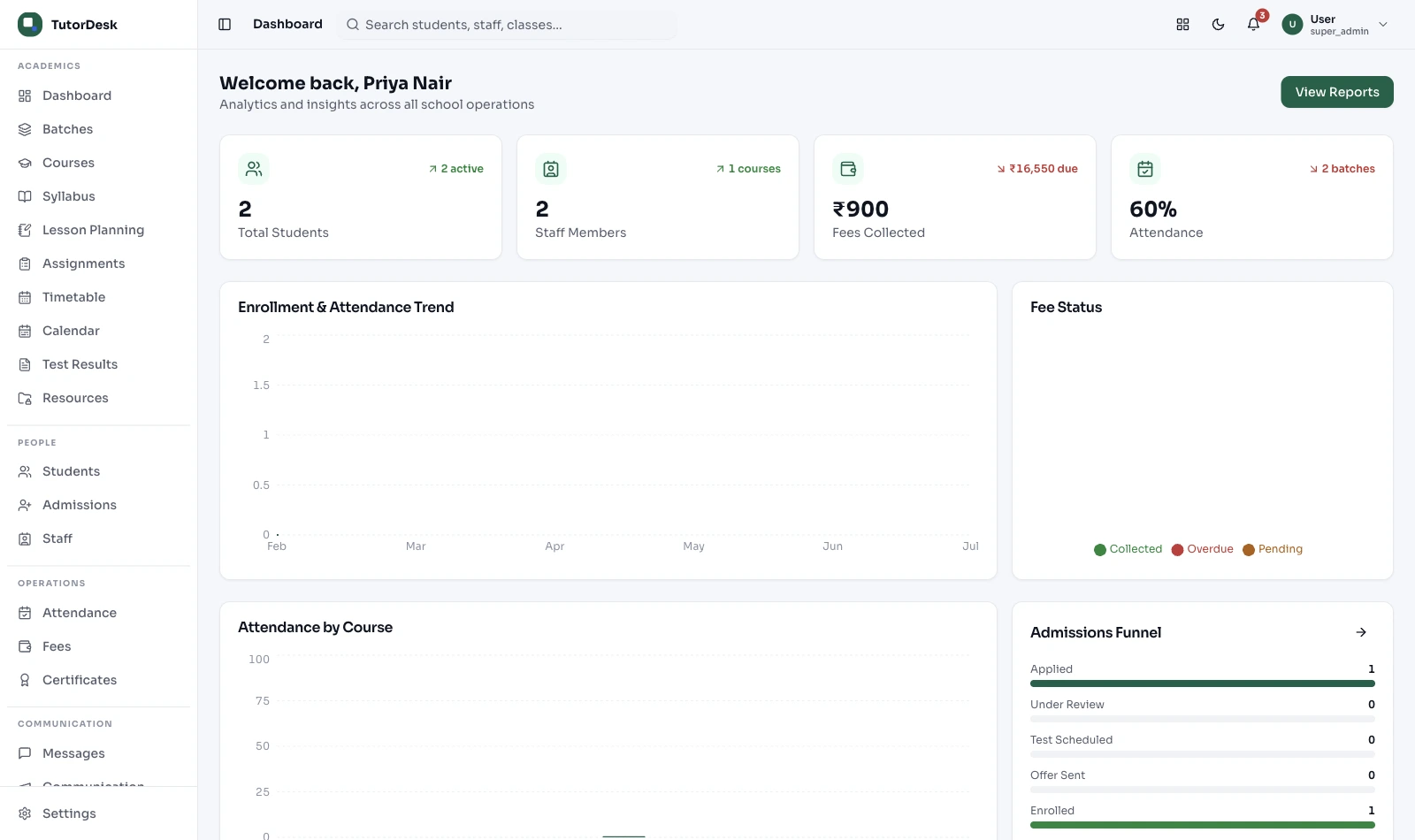
Each level is a course with its own fee, duration and batches, and a student’s record shows the ladder climbed. Completions drive certificates and the next-level conversation.
Yes — packs are tracked session by session: attended, remaining, and make-ups granted. The front desk and the student see the same count, which ends the make-up disputes.
Per-active-student pricing follows your roster — small groups pay small. What matters more in this model is fill rate per batch, which the occupancy view keeps in front of you.
One system: French, German and Japanese run as course families with their own levels, teachers and batches, reported separately and together.
Exam-cycle charges run as line items beside course fees on the same ledger — registration support, mock-session packs, materials — so families see one truthful statement.
Yes — updates and receipts go to the student for adults, to parents for minors, from the same batch and record structure.
A 20-minute demo set up for a language institute — levels, session packs and exam cycles included.


